
Where Home Becomes Java, continued
Echoes Without End

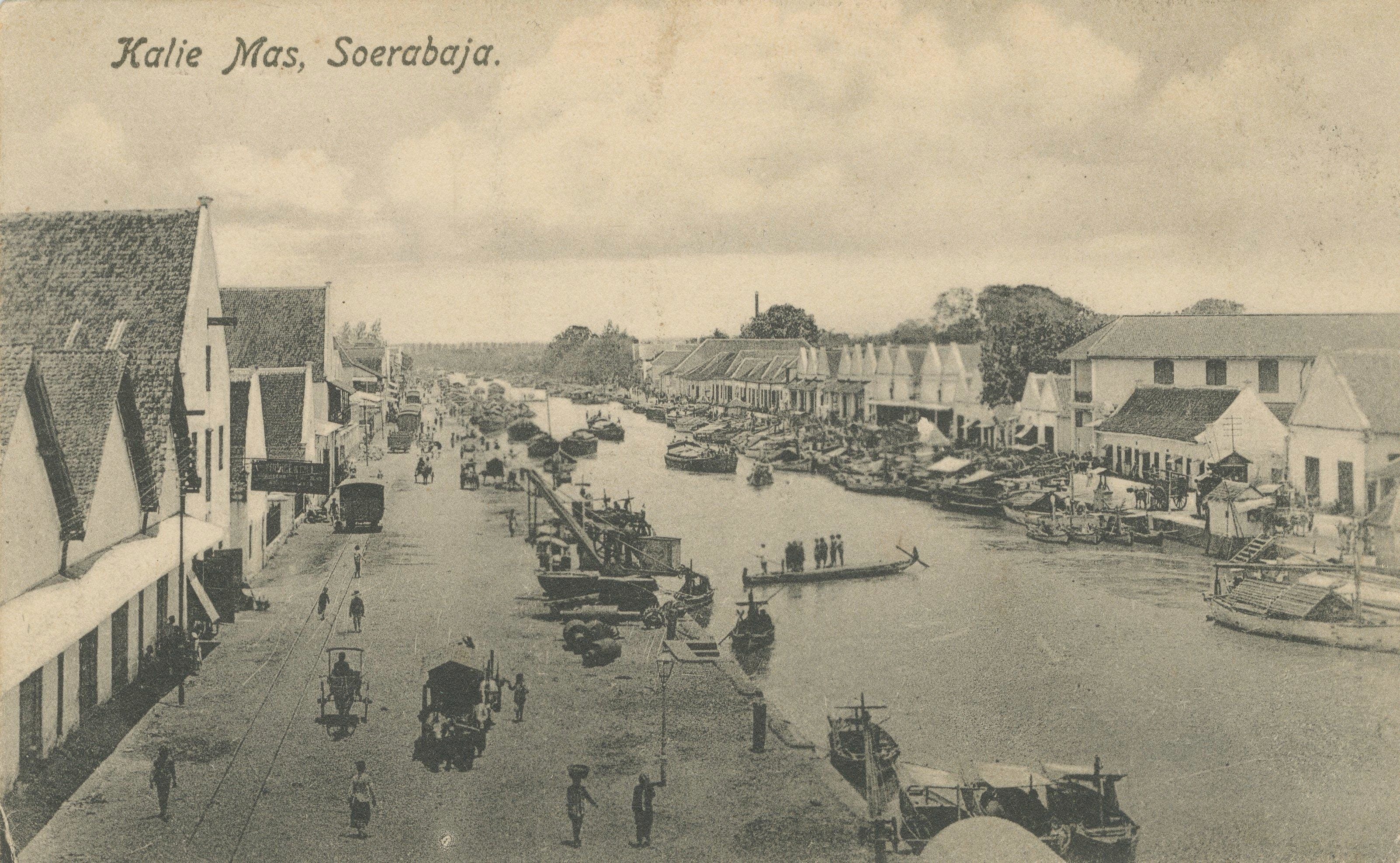
Resident’s Office, Surabaya, 1835
The office is busy with Dutch officials, Javanese messengers, Chinese merchants, and local regents or their representatives making petitions or waiting for permits, licenses, or other paperwork that needs processing and dispensation. Willem, as administrative officer, is handling the shipping inventories.
Willem and Pieter, his assistant, take the inventory down to the pakhuis to check an arriving shipment. They are looking over Willem’s shipping inventory.
Pieter points to a Dutch word in the inventory, “They will not call it that at the pakhuis, Meneer.”
“This is the correct name,” Willem replies.
“Yes, Meneer. I understand, but they may use a different word,” Pieter says patiently.
Willem considers this, then adds the local term beside the Dutch one.
Later in the day, a local official arrives to pick up a permit. After the transaction is concluded, the man leaves a basket of mangosteens.
At the end of the day, Willem sees the basket.
“Where did that come from?” he asks Pieter.
“It’s a gift from the district official.”
Willem stiffens and says, “We cannot accept that. We must remain impartial. This can lead to corruption.” As he speaks his voice becomes more forceful.
“I believe the official meant to show respect. He is honoring the relationship,” Pieter responds quietly.
Willem looks at the basket.
The clerk says nothing more.
Outside, a messenger carries the gift back across the courtyard.
Willem returns to his papers, though with slightly less certainty than before.
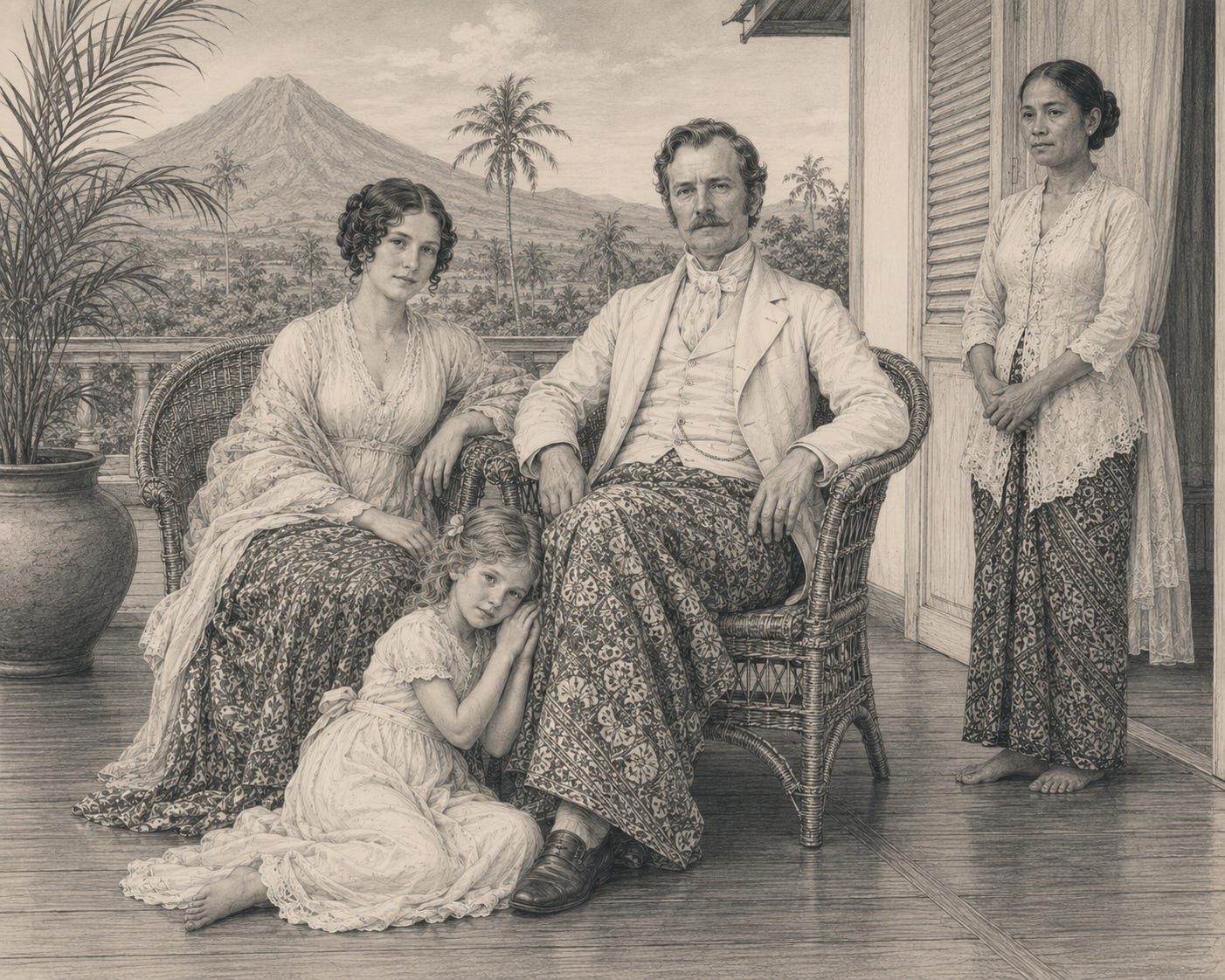
In the Gallerij, 1855
As the heat eases into the late afternoon shadows, the von Franquemont family relax in the gallerij. Willem’s daughter Lotta is playing the fortepiano. Adri, his wife, is flipping through a women’s magazine. Willem, in a sarong and loose jacket, is studying his coin collection.
Mbok Sari brings a tray with tea and coffee. Another servant cuts mango and durian.
Willem flips through the book holding VOC, British, Dutch and German coins, once in a while taking one out to polish.
Mbok Sari, the elder servant who has worked for Willem since before his marriage, notices Willem squinting. She leaves and returns with his spectacles.
When Lotta finishes her piece, she joins her father. Pointing at a small gold coin with a crown on it, Lotta asks, “Where is this one from?”
“Ah, this one is from the time of the Duke of Württemberg. He was your great-grandfather”
Lotta sits cross legged on the floor ready for the story she knows is coming.
“He lived in a grand palace with hectares of ground. But different than here. Not with so many trees close together, but open rolling green hills dotted with white sheep. First the leaves turn golden and red and then fall off the trees. In winter everything turns white. In spring small blue flowers grow among the grass,” he says as he reaches for a piece of durian.
“His lady, my grandmother, played fortepiano, like you, and had the voice of a nightingale. My father and your uncles came here on big ships with three masts. It took half a year to get here.” He pauses. A screech of a monkey can be heard from the garden.
Adri smiles at Willem. She has heard the story many times before.
Mbok Sari catches Adri’s glance and hides a smile behind her hand. She has heard it before too.
Nobody interrupts.
©2026 Astrd Berg
Thanks for reading Astrid’s Substack! Subscribe for free to receive new posts and support my work.