
Where the Mountain Listens
Echoes Without End

9th Century Central Java
Central Java lay cradled between volcanoes, with Mount Merapi rising active above fertile land. Ash enriched the soil, and villages formed along rivers and irrigation channels. Mist settled in the valleys at dawn, lifting to reveal terraces, groves, and distant stone.
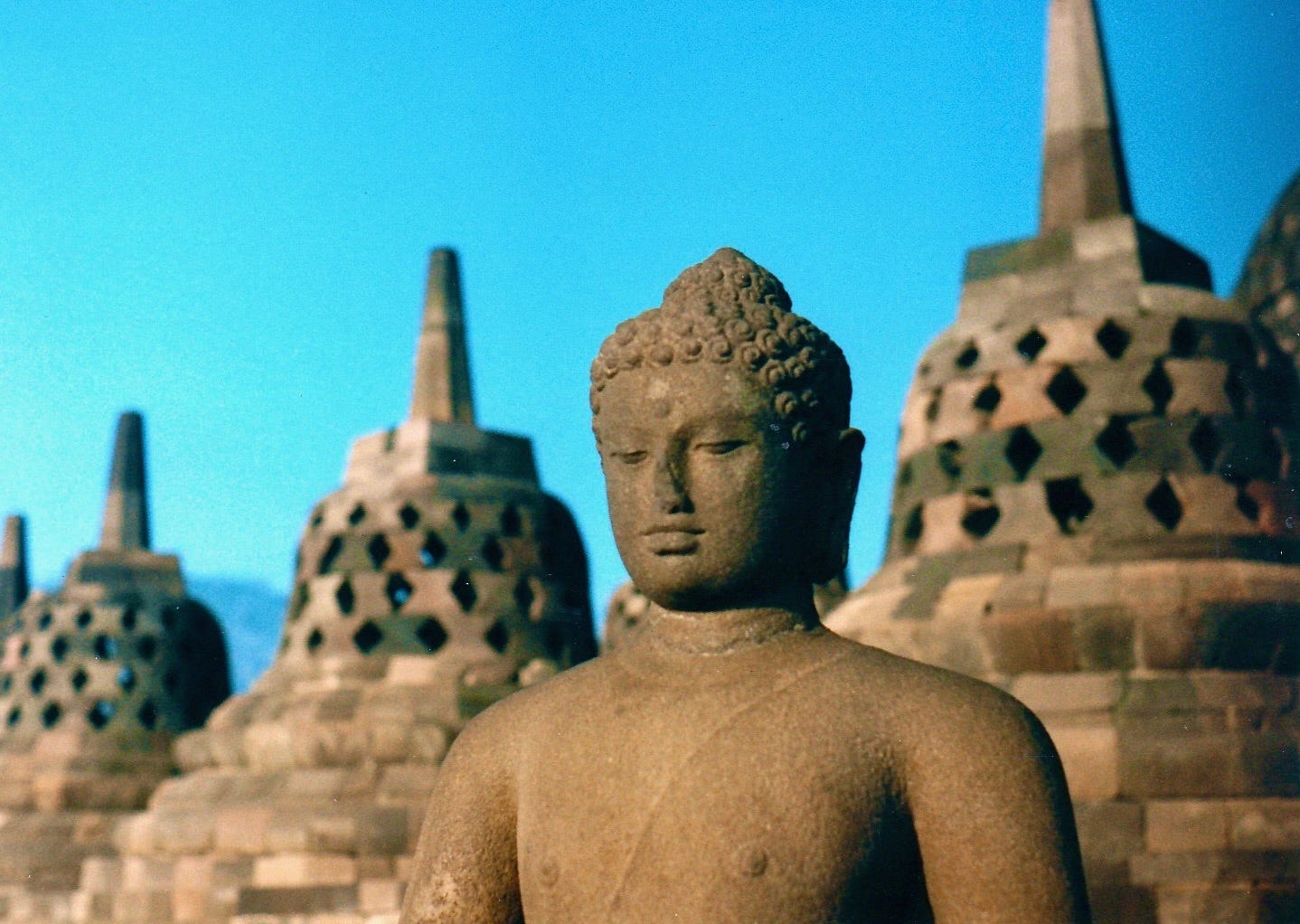
At the center of this landscape stood Borobudur, built in the 8th–9th centuries under the Sailendra Dynasty. It rose like a terraced mountain, echoing the hills. Pilgrims moved upward in slow circumambulation, guided by reliefs and the rhythm of their steps.
Buddhism did not replace earlier ways—it settled into them. People continued to relate to hyang, danyang, roh, and semangat, sensing that actions ripple outward and balance must be maintained.
Village life followed shared rhythms rather than rigid hierarchy. Authority was carried in example, tone, and the continuity of daily practice.
Mist
Walking down the path to fetch water, Sari sees a man in a robe, one shoulder bare. Sunlight rests on his smooth scalp as he bends over the stream, cupping water in his hands. A dark bowl sits on a stone beside him.
She has seen monks before, seated in stillness at the temple. Watching them, she felt drawn to their quiet breathing.
Unsure how to approach, she waits.
The monk hears her and looks up.
“Come,” he says. “The stream does not belong to me.”
“Thank you, Wiku,” Sari replies, lowering her gaze. She steps forward and fills her bowl.
They bow.
Sari leaves melati (jasmine) flowers on a rock near the river and pauses. Then she walks toward the village as the mist begins to lift. The upper terraces of Borobudur emerge above the valley.
Morning Work
When Sari becomes a young woman, she marries—as expected—a man from a neighboring hamlet. She and her husband, Merta built a home of bamboo with a palm-leaf roof.
Sari rises soon after the cock’s crow. She, Merta, and the children eat a simple meal of nasi (rice) and vegetables before heading to the fields.
When Sari arrives at the paddies, she presses her fingers into the earth and drops a few grains of nasi, pausing before she rises to join the others.
The men shape the land—building terraces, clearing irrigation channels, guiding kerbau (water buffalo) through wet soil. The women gather along the stone-lined channels. In the flooded paddies, they stand bent in long lines, pressing young shoots into the mud. Children shout as they chase birds from the fields.
“That boy of mine can scare birds all morning,” Sinta says, grinning, “but when it comes to fetching water, his legs forget how to walk.”
The women nod.
“The sawah (rice field) drinks well this year,” says Rara.
“If the rain comes early, we will have good nasi,” Sinta replies.
As Sari plants, the warm mud folds around her feet. Gradually she notices the rhythm—the steady motion of hands placing seedlings into water. In the distance, Mount Merapi rumbles.
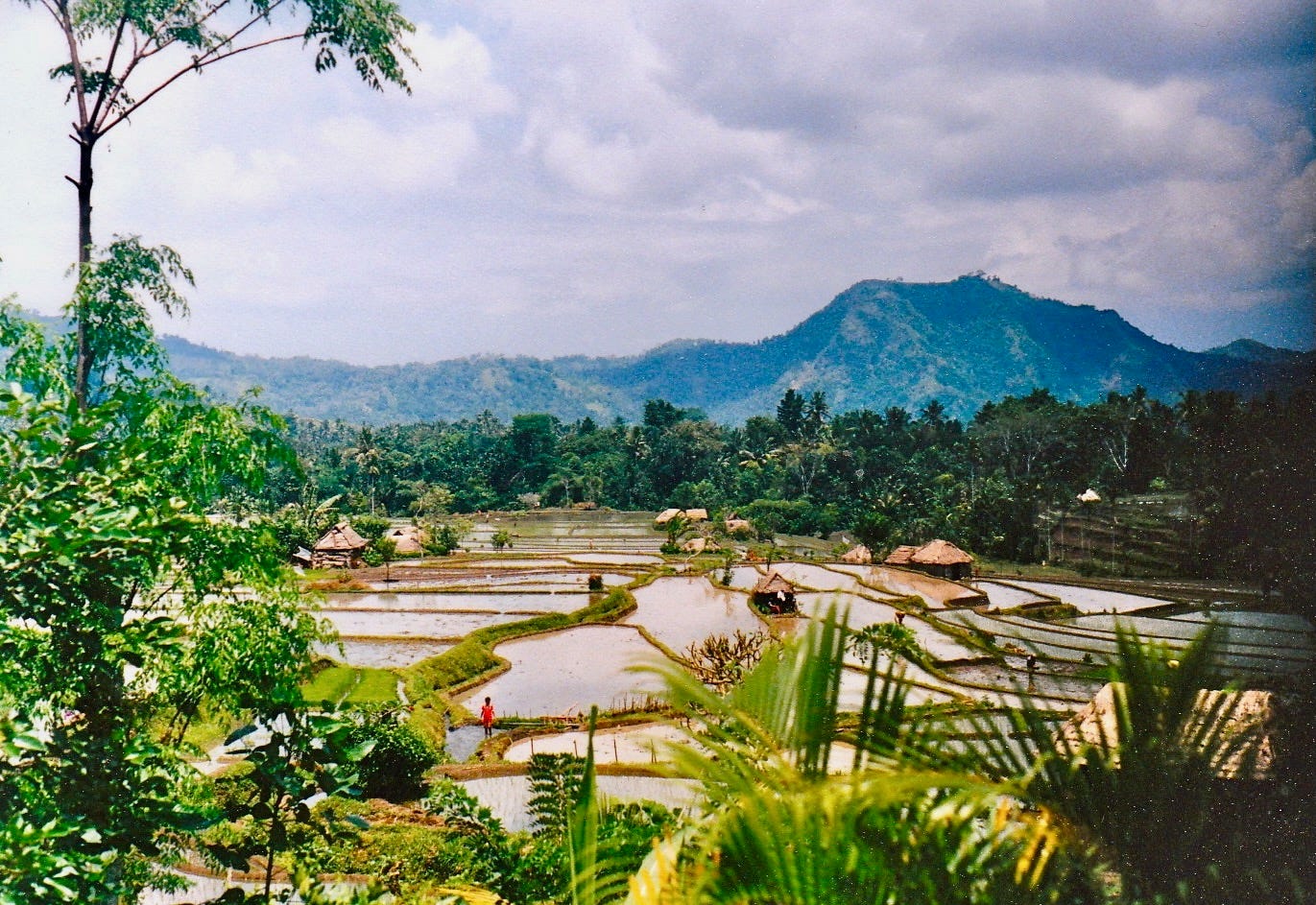
At dusk, the women walk together to the stream to bathe. On the way home, some stop at a small altar beneath a tree, placing melati gathered during their walk. In the distance, the temple rises above the valley.
Smoke drifts from cooking fires. The scent of spices moves through the air. Night insects begin their chorus as darkness settles. The volcanoes stand in silhouette against the fading sky.
The Disturbance
The following morning, Sari hears the sound of steps. She listens. She stills. She steps outside and stands at the threshold. The light has shifted, though she cannot say how. The path lies open.
Later, she finds the nasi basket lid lying open, ash scattered where no one had stepped. She almost scolds her daughter for her haste but sees that Lestari has noticed it too. Nothing was taken. Nothing is broken.
“The semangat (life force) here is not settled,” Sari says.
She takes the path she has walked since childhood, the one that curves between the low trees before opening toward the paddies. It is neither longer nor steeper, yet her steps do not fall where she expects. She slows, then steps forward again, as if finding the ground anew.
At the place where the paths meet, she comes upon Nara, who would normally have taken the same way. They nod in greeting but say nothing.
The women work as usual, side by side, feet in the mud, hands moving in rhythm. A bundle of young shoots lies at the edge of the water, their roots drying in the sun. Sari reaches for them, then pauses. Her hand does not meet them. Someone else steps in and presses them into the mud without speaking.
At midday they sit beneath the trees and share food. Sari settles a little apart, then draws closer again.
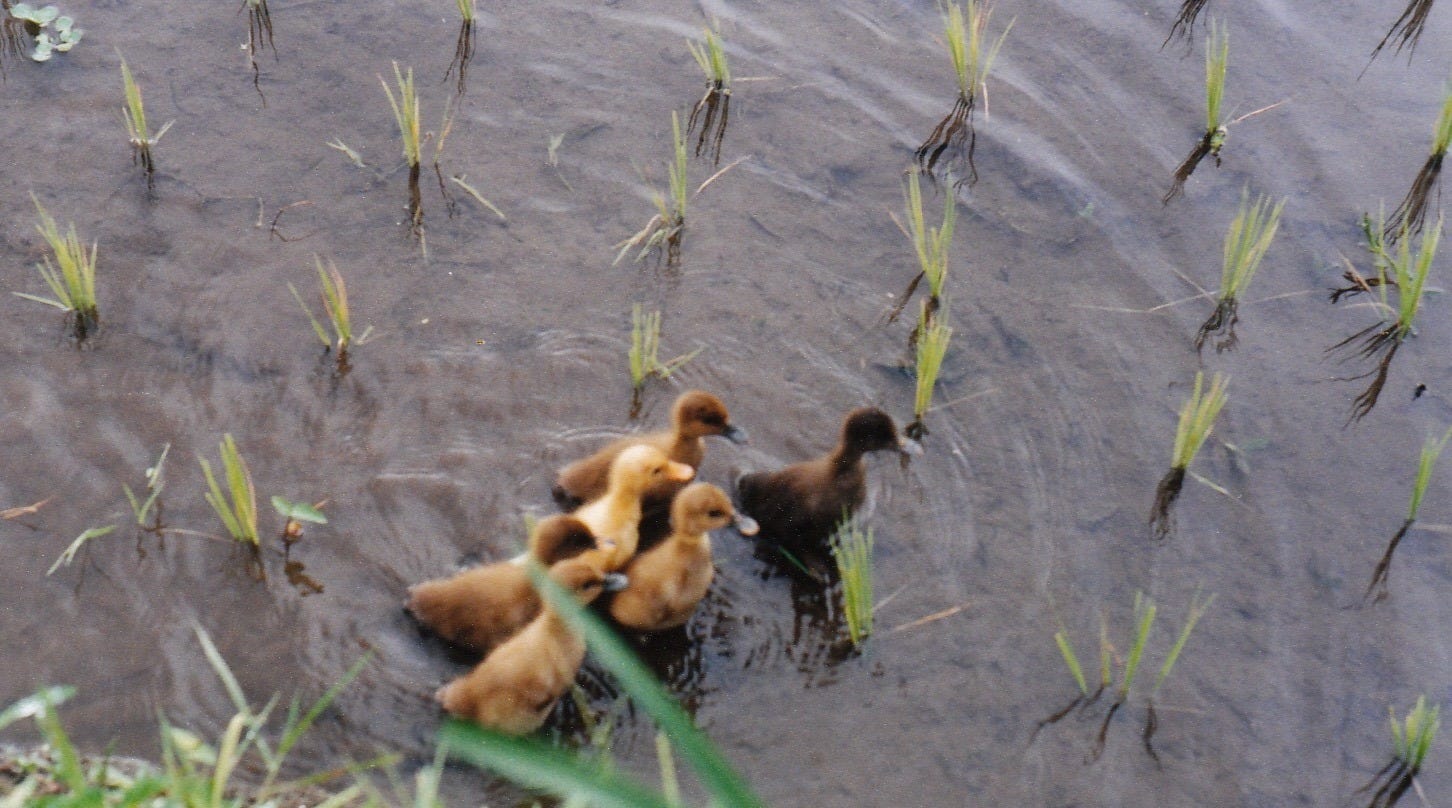
The forest edge is still. No birds land. Even the leaves seem to hold still. Sari looks for the ducks along the water. There are none. Her gaze lifts without deciding to, toward Merapi.
As the sun lowers, the women pass the grove without entering. They keep to the outer edge, their steps widening the circle around it. The trees stand as they always have. No wind moves through them. No sound rises.
“Best not to cross it today,” Nara says.
Sinta nods.
As the light fades, Merta returns along the outer path, a bundle of cut grass over his shoulder. The path is clear, yet he steps wider, circling where he would usually pass straight through.
At the fence he sets the bundle down and begins to untie the cord. His hands pause. The knot is already loose.
A dog approaches from the far side of the yard and stops short of the gate. It waits, then turns, waits again, and takes the longer way around.
Merta watches it go, then lifts the grass. He thinks, It has not been like this.
At home, Sari has difficulty lighting the fire. She bends close, coaxing it, though the wood is dry. When it catches, she sets water to heat in a ceramic pot. She lifts the lid to add the nasi. The nasi is already there.
She lowers the lid and remains still a moment before turning back to the fire. Once the food is done, she reaches for the ladle and closes her hand beside it, not around it. She pauses, then tries again. She steps outside, pauses, and calls the family to the meal.
The Failing Rhythm
With the planting done, the villagers turn to other work. A few of the women pound nasi. Rara beats the grain to loosen the husks while Sinta winnows. She rocks a flat woven bamboo tray, lifting and tilting it so the lighter husks fall away. The husks rise and fall, then settle back among the grain. They do not separate
Sari sits with the loom stretched before her, the far end tied to a tree. Beside her, Lestari winds thread onto slender sticks. Sari’s hands move in rhythm, passing the thread through and pressing it into place. She works a repeating pattern of yellow and indigo.
Sari’s hand moves with a soft whooshing sound, while Lestari’s hand moves almost silently in a small circle. From nearby comes the steady strike of pestles. The rhythm does not quite hold.
After a time, Sari pauses to look at her work. The yellow line shifts, a slight zigzag where it should run straight. She draws the thread out and begins again.
The younger children remain nearby, playing with pebbles and husks, shaping small forms and filling them in. Young Jaya keeps rearranging his shape, though it will not settle.
The older children run along the paths at the edge of the village, weaving in and out of huts and low bamboo barriers. The leader moves his arms in wide gestures that the others imitate, though their movements do not quite match his. He stops abruptly, as if waiting for something to pass. Nothing does.
Except for the children, the village is quiet. People speak softly.
Sari sets the thread aside sooner than usual. The women go to the river to bathe. She does not join but rests in her hut. Her skin is damp. She lies still, following her breath.
That evening, Lestari prepares the meal, and Sari rises to join them. They eat nasi with greens and a little salted fish.
“Ibu, are you well?” her daughter asks.
Sari eats slowly, focused. She answers, though the question has already passed.
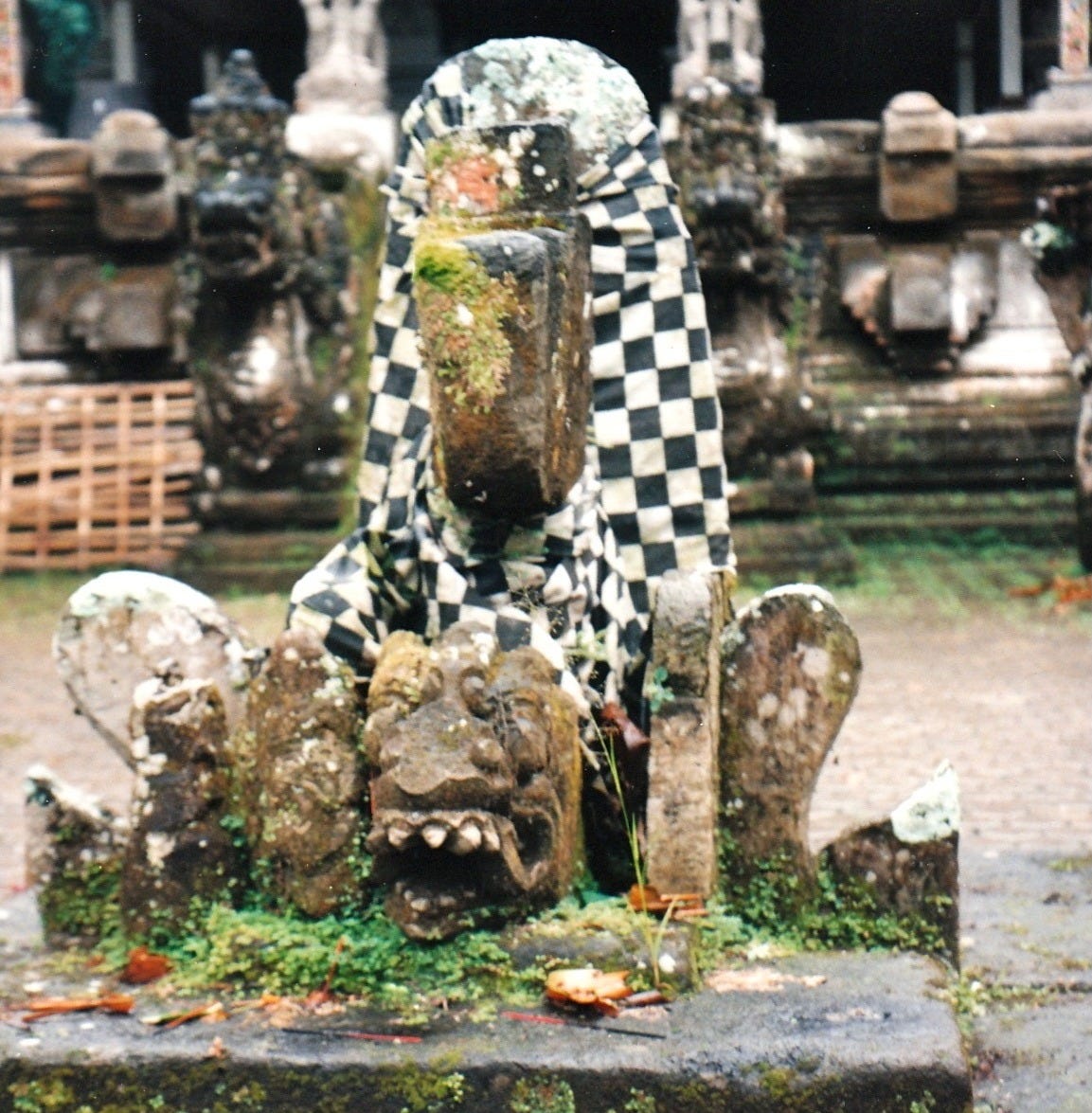
At sunset, Sinta places a small bowl of kamboja (frangipani) at the grove and murmurs softly.
The following morning, Sari wraps her kain panjang (long cloth) around her waist and secures it with a stagen (binding sash). She begins to wrap the kemben (chest cloth) but draws it too low.
Lestari gently lifts the cloth so that it covers her mother’s chest, as if it had slipped. Both know otherwise.
They return to the weaving. Sari gathers her loom and thread and moves to sit beneath the nangka (jackfruit) tree with its large trunk and wide canopy.
Lestari watches her mother weave. Sari’s hand passes the thread across but does not quite meet it. She tries again. It does not land. She does not try again.
Rara brings her a cup of coconut water. “Sip,” she says softly.
Lestari moves the loom aside, and together they guide Sari home.

The air presses against her skin. Light filtering through the bamboo slats does not settle. She waits for it to settle. It does not. She lies still.
Lestari sooths her mother by trickling cool water over her body. The women look in and bring her fruit and nasi broth. She takes very little. They tend her quietly, as one whose semangat has not settled. Sinta places a sirih (betel) leaf near her.
By evening, Sari is barely aware of her surroundings. She breathes—in and out.
Blue morning light rests across the mat. Sari’s breath moves, steady. The air is cool against her skin. She sits. The movement comes without effort.
Someone has brought the loom beneath the nangka tree. Sari sits behind the loom, not as close as she once did. She passes the thread across. She feels a slight awareness in her hand. The thread lands. She pauses, then passes the thread again. Her breath steadies.
Lestari sits beside her and resumes her task of sorting thread. She briefly meets Sari’s eyes, then continues her work. When children come near, they are quiet. Sinta places a banana and mango beside Sari.
Two women are speaking softly near her. “It has settled,” one of them says.
The women rise for their meal. Sari remains seated behind the loom, her hand resting on the thread.
The next day, the women gather for the midday meal, passing food from hand to hand.
Sari sits beneath the nangka tree. She drops kunyit (turmeric) and jahe (ginger) into the mortar and grinds, the dull rhythm of stone against stone settling into her hands. When she’s done, she hands the bowl to Sinta, who tends the rice over the fire.
Blue Morning
Blue morning light settles across the stone. Pilgrims move along the lower paths. Sari walks the upper terrace, her steps slow and even, in time with her breath. The stone leaves a cool, moist trace as her foot rises.
Below lies the fog. Doves serenade the mountain valley. Sari continues her pace as she returns to her hut, pausing to pick up fallen branches for fire. Near the pond, she gathers greens and banana for her meal.
Her hut lies at the edge of the mountain, near where the water cascades into a pond. She leaves what she gathers, then fetches water for the day in a gourd. At the hut she stokes a fire and prepares her meal of nasi and greens spiced with jahe and kunyit. After her meal, she sits on a mat on her platform. Sari hears hurried steps coming up the mountain path.
The woman approaches.
“I brought this,” she says, offering nasi wrapped in a banana leaf.
Sari gestures for her to sit.
The villager looks back toward the village and then sits.
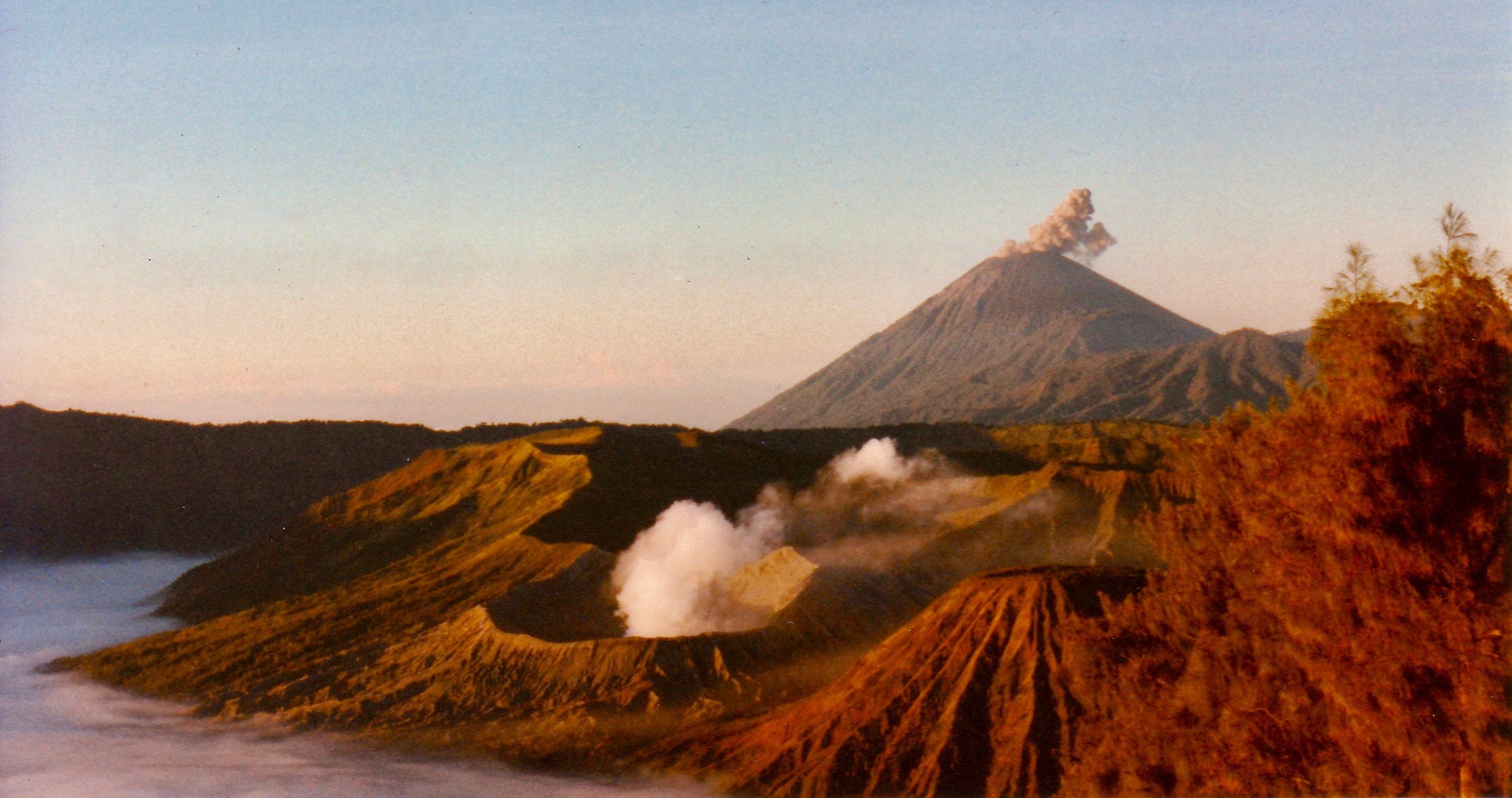
“Many nights I wake before dawn to Merapi rumbling,” she begins. “I see ash drifting in the morning light. I am afraid for Bima.” She pauses.
Sari listens, her hand resting on her knee.
“The mountain has turned toward us. I hold Bima close.”
Sari waits, then asks, “And now?”
The woman breathes. “My chest is tight.”
Sari breathes with her.
After a moment, she says, “When you wake, sit until your breath settles. Then place kamboja at your threshold.”
The woman nods. She rises more slowly than when she came.
A flash of blue crosses the water.
The sun lowers along the mountains. A traveler moves along the path toward the great temple, his sandals worn thin. He turns a string of faded red beads in his hand. He sees a woman seated on a low platform, dressed in earth tones. He bows his head slightly.
Sari returns the greeting.
He remains standing, shifting his weight from one foot to the other, his hand moving along the strap of his bag. He takes out a small bronze weight.
Sari gestures for him to sit.
He sits and places the object beside him. “I…” he begins, but the words do not come.
Sari waits.
“I am on my way to Merapi. I come from beyond the western coast, far beyond the strait.”
Sari breathes and waits. The wind moves across the slopes.
“I have been a trader since I was young. I left my village in Gujarat.” He falters. “I was a trader,” he says again. “Now I am a pilgrim.”
He turns the beads in his hand.
“I left a man behind. He was holding us back. He had been injured. We cared for him as we could. Then we were robbed.” He lowers his head. “I should not have left him.”
“Did he agree to stay?”
“Yes. But…” He pauses. “I knew he would not survive.” His shoulders drop.
“You have carried him far,” Sari says.
The traveler is still. He begins to speak, then stops.
“I see him when I close my eyes,” he says.
The beads fall quiet in his hand.
When he rises, the bronze weight remains where he set it.

Sari comes to the pool to fetch water. She sits down and places her feet in the water. As she moves them, the water does not break into splashes. Instead, it folds, parts, and closes again. Sari’s feet move again, tracing opposing circles.
A young boy farther down, throwing rocks into the pool, watches. He drops his rocks, puts his feet in the water, and imitates. The water ripples outward in smooth rings heading in opposite directions. He expects splashing, but there is none.
The boy watches the water until it settles, then moves his feet again. The blue breaks, moves outward, and does not stop.
©2026 Astrid Berg
That is so rewarding to hear. I am practising to write from instead of about and to do a less is more practice. I have been concerned that the story/message is not coming across. Your reaction is quite confirming.
Reading these are like a meditation. I feel settled as I follow the thread of the story. So little is actually said, and so much is communicated. Beauiful